Franchise growth is easy to see. Operational readiness is not.
Territories awarded, salons opened, and development milestones generate attention. But they reveal relatively little about what happens when a franchise partner opens their doors, a team begins serving clients, and a business has to perform day after day.
After more than two decades on the franchisor side of the business, I've learned that growth rarely creates operational weaknesses. It exposes the ones already there.
Momentum gets attention. Infrastructure and performance determine longevity.
For an emerging brand, expansion is often treated as validation. And to an extent, it is. Attracting qualified operators and entering new markets demonstrates confidence in a concept's potential.
But convincing someone to invest in a business and equipping them to operate it successfully are two very different disciplines.
As a network expands beyond a handful of closely managed locations, what once worked through personal relationships, institutional knowledge, and direct intervention must become teachable, measurable, and repeatable.
That's where infrastructure becomes essential.
Building an Operating System, Not Collecting Software
Infrastructure is more than an operations manual, training program, or collection of technology platforms.
It's how those elements work together to support franchise development, opening readiness, customer acquisition, daily execution, and ongoing performance improvement.
Technology plays an increasingly important role, but more technology doesn't necessarily mean better infrastructure.
I've seen organizations invest in solutions that work well independently but create friction when brought together. Information becomes fragmented, teams develop workarounds, and operators spend valuable time navigating systems rather than running their businesses.
The challenge is understanding which capabilities are fundamental to the operating model and how much control the organization needs over how they evolve.
Sometimes an existing solution is the right answer. Other times, a purpose-built approach makes more sense.
Neither is inherently better.
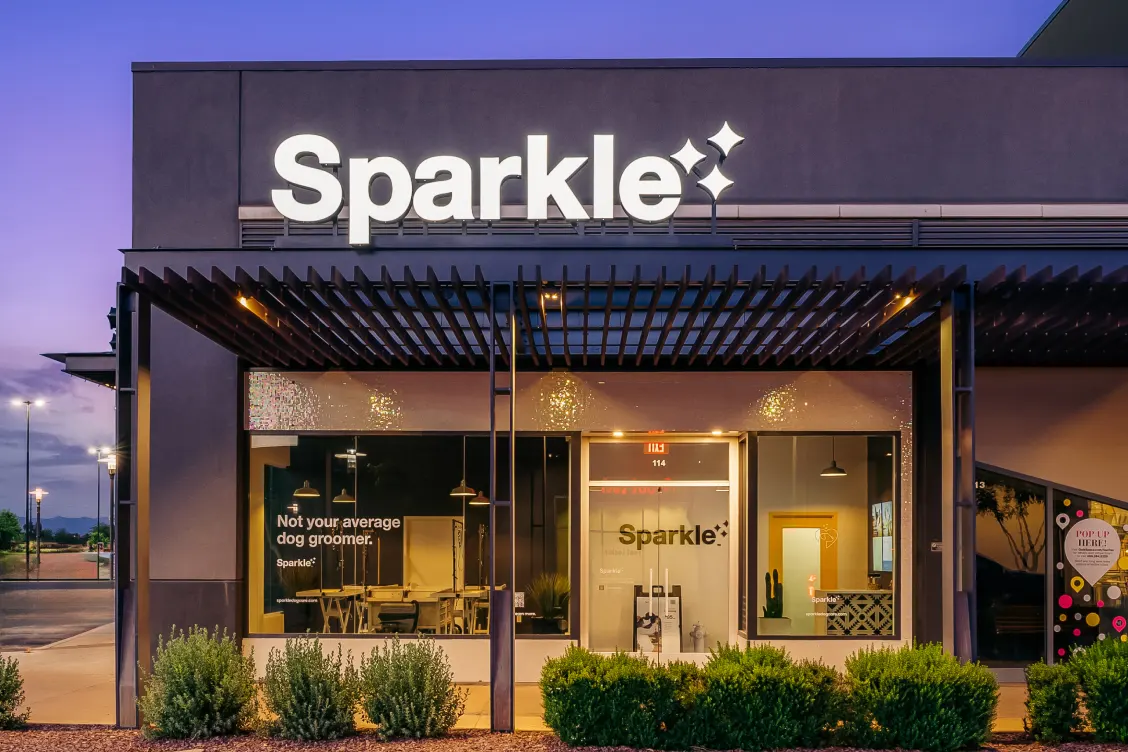
At Sparkle, that thinking has shaped our approach to infrastructure. The focus is on building capabilities around the realities of the business, rather than continually adapting the business to the limitations of its systems.
Because infrastructure should simplify execution, not become another layer of complexity.
The Real Advantage Is What You Learn
Technology can improve efficiency. Connected information creates the opportunity for something more valuable.
Better decisions.
As franchise networks expand, they generate increasing amounts of operational information. But access to more data doesn't automatically translate into better performance.
The value comes from understanding the relationships between activities that are often managed independently.
Which pre-opening decisions contribute to stronger launches? Which customer acquisition activities create lasting relationships? Where can scheduling and labor utilization improve? What practices consistently support stronger retention?
These aren't simply reporting questions. They're operating questions.
And the answers matter only when organizations can turn those insights into action, measure the results, and apply what works across the network.
Historically, much of franchise infrastructure has focused on preserving consistency as a system expands. That remains essential. But connected systems and better information create the opportunity to continuously improve the model itself.
Every location adds experience. Every challenge creates an opportunity to learn. And every improvement that can be replicated has the potential to strengthen the broader system.
The objective isn't simply to build infrastructure capable of supporting more locations. It's to build an organization that gets smarter as it grows.
Performance Is the Ultimate Test
Ultimately, the measure of infrastructure is what happens inside the four walls.
Franchise partners don't experience infrastructure as a corporate strategy. They experience it through training clarity, team efficiency, customer retention, and the ability to operate a profitable business.
Technology can support those outcomes, but it cannot replace experienced operators, disciplined standards, effective field support, or good judgment.
The best systems don't eliminate the need for people to make decisions. They give them better information and the confidence to make those decisions effectively.
And that's an important distinction.
Building a network capable of accommodating growth is not the same as building one capable of continuously improving because of it.
The first is about capacity.
The second is about capability.
Infrastructure doesn't guarantee success. It requires continued investment, refinement, and accountability. But over time, I believe the ability to turn operating experience into measurable improvement will increasingly distinguish the brands that expand from those that endure.
Because the strongest franchise systems aren't simply built to grow.
They're built to get better as they grow.
About the Author
Joe Aeppli is Co-Founder and Chief Operating Officer of Sparkle Grooming Corp., where he helps shape the emerging Quick Service Pet Care (QSPC) category through disciplined franchising systems, hospitality-driven service, and purpose-built technology. He brings more than two decades of franchise leadership across health + wellness, personal care, retail, and home services.
Not your average franchise.
Sparkle is where routine pet care meets small-box retail + social service. Our membership-based QSPC is an essential companion for any dog's health + well-being.
Learn More